Check four real estate sites for the median home price in Chambersburg, Pennsylvania this month and you will get four different numbers, and none of them is wrong.
One site's automated model puts the average home value at $293,162 as of June 2026. Another lists the median asking price at $343,000 for September 2026. A third pegs the median estimated value at $281,850, with a median list price nearly $22,000 lower than that. A fourth reports a trailing twelve month median sale price of $280,000, up 4% from the year before. Four sources, four methodologies, and a spread of more than $60,000 on what is supposedly the same town.
| Source type | What it measures | Figure | Time window |
|---|---|---|---|
| Automated valuation model | Average estimated home value | $293,162 | Through June 2026 |
| Portal listing data | Median list (asking) price | $343,000 | September 2026 |
| Property database | Median estimated value / median list price | $281,850 / $259,900 | Current listings |
| Portal listing data | Median sale price, trailing 12 months | $280,000 | Up 4% year over year |
Most explanations for this stop at methodology. List price is not sale price. An algorithm's estimate is not a closed transaction. Those differences are real, but they are not the interesting part. The interesting part is geography, and it is something none of these sites disclose on the page where they publish the number.
Why "Chambersburg" Covers More Ground Than the Town
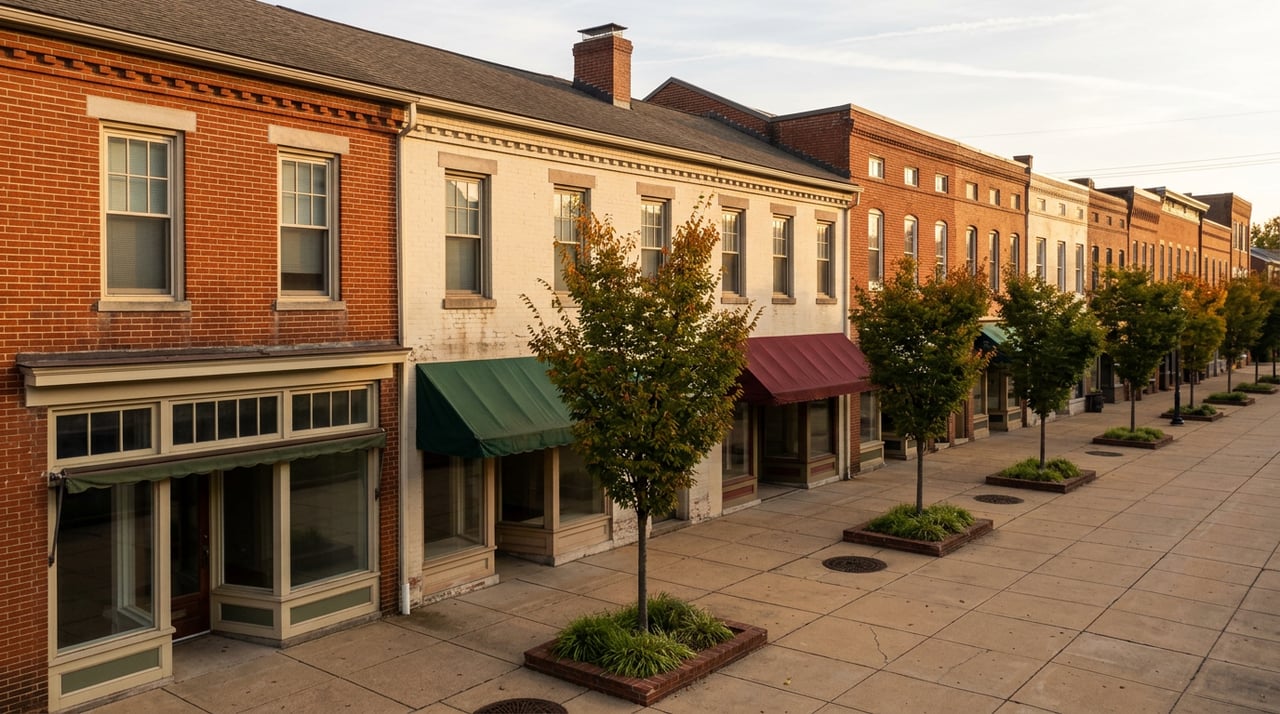
Chambersburg the borough has defined limits. Chambersburg the mailing address does not. Property data providers typically pull records by ZIP code, and Chambersburg's addresses span two ZIP codes, 17201 and 17202, that reach well beyond the borough line into unincorporated parts of Guilford Township and Greene Township. A home in South Guilford Hills or off Norland Avenue near the Walker Road exit of I-81 carries a Chambersburg address and gets folded into "Chambersburg" market data, even though it sits in a different township with its own zoning, its own supervisors, and its own tax structure.
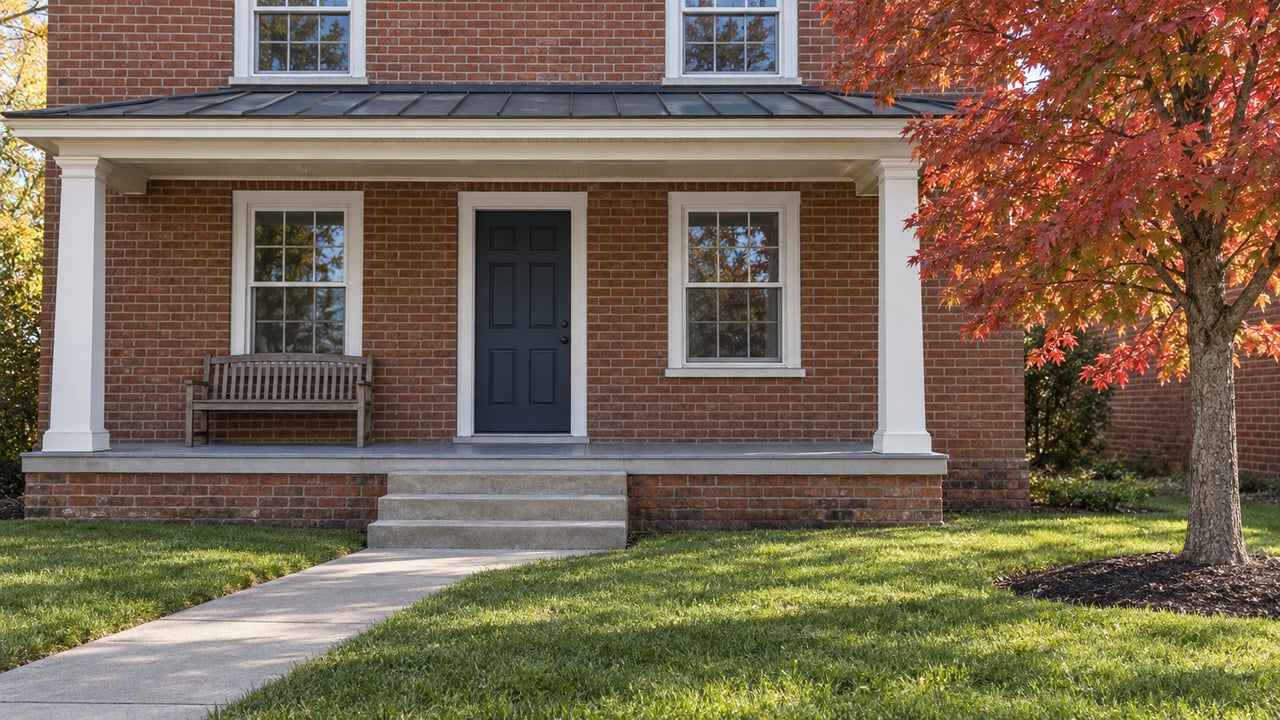
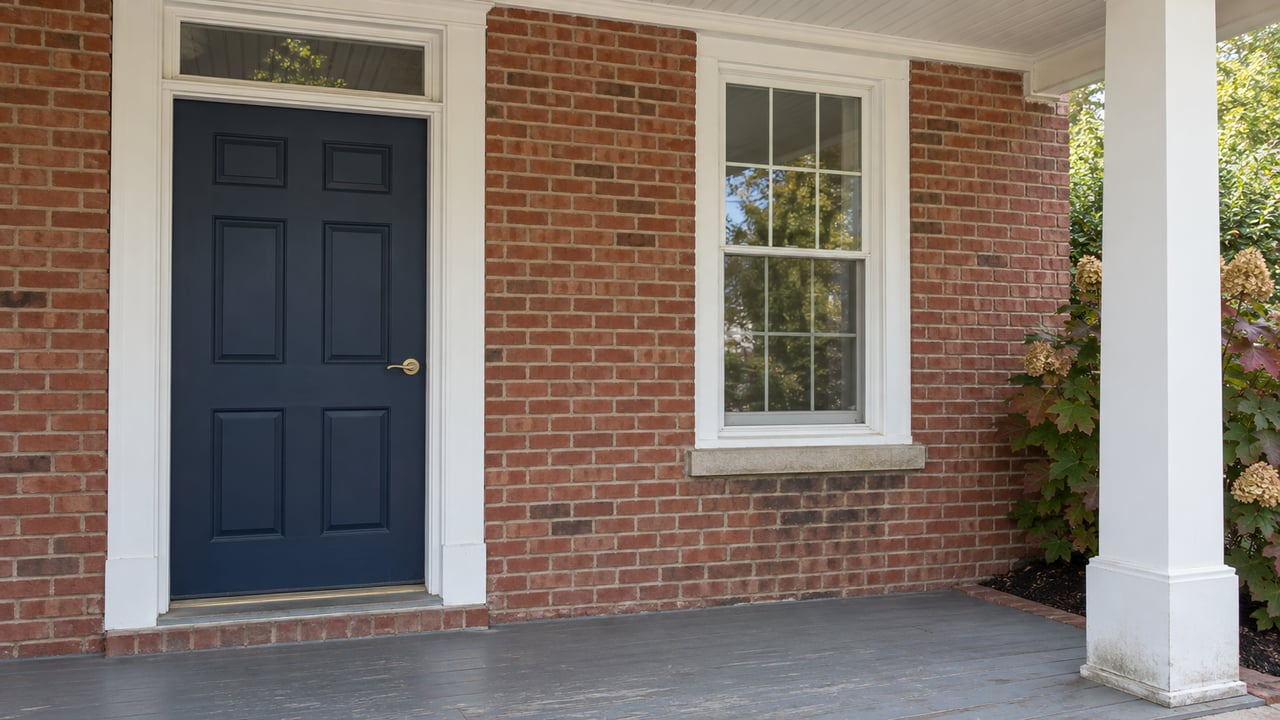
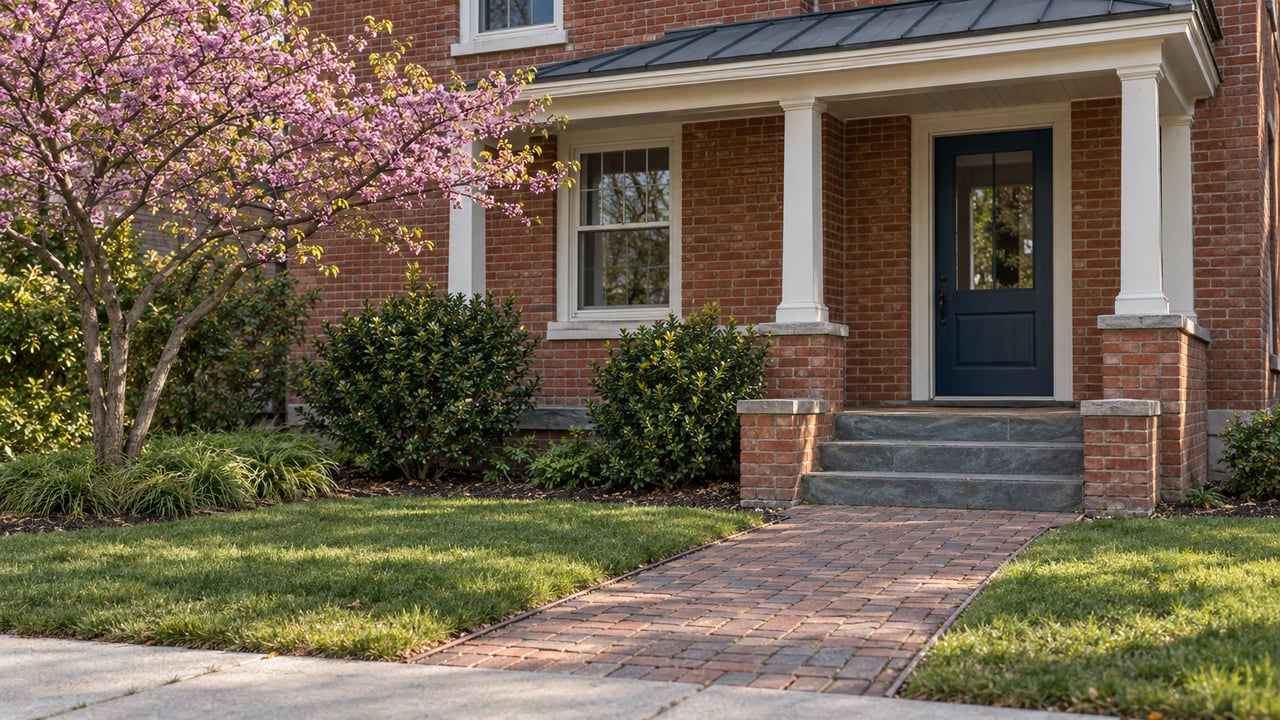
That matters because the housing stock in those two geographies is not the same product. Inside the borough, you are largely looking at resale homes built decades ago: rowhomes, older single-family houses, and infill parcels like the triplex-ready double lot currently listed near downtown, or the Meadowbrook development's duplex units close to shopping and health facilities. Outside the borough, in the Guilford and Greene Township corridors, you are looking at new construction on former farmland: Colonial-style builds in South Guilford Hills, D.R. Horton's twin homes at Chambers Crossing near Norland Avenue and the Walker Road interchange, and the Whiskey Run community off I-81 near Greene Township Park, where builders are advertising completions through 2026 with granite countertops and upgraded flooring as standard.
Blend a decades-old rowhome with a brand-new Colonial on a builder's premium lot and you get a median that describes neither one accurately. That is the real reason the four numbers above do not agree. They are not measuring the same market twice with different math. They are measuring two markets with the same label.
What Each Side of the Line Actually Gets You
Inside the borough, the appeal is walkability and price. You are close to downtown shopping and dining, often on public water and sewer that has been in place for generations, and the entry price tends to track closer to the $259,900 to $280,000 range that shows up in the more resale-weighted figures. What you give up is the finish level: older kitchens, smaller lots, and in some cases the maintenance list that comes with a house built well before open-concept floor plans were standard.
Outside the borough, in the township subdivisions, you are paying for the newer end of the spread, the end closer to $293,000 and up. In exchange you get quartz counters, primary suites with private baths, and in communities like Falling Spring Estates, features like engineered hardwood and stone fireplace surrounds that show up in current listings near the Falling Spring stream. Some of these homes sit on lots over an acre, like the South Guilford Hills homesite perched above the stream that recent listings describe. Further out, golf course communities like Penn National and the Greens of Greencastle offer a different trade entirely, exchanging in-town convenience for acreage and course frontage.
Neither side is the better deal in the abstract. They are different products at different price points, and the only median that helps a buyer is the one built from comparable homes in the specific pocket they are actually considering.
Why New Supply Here Has Stayed Single-Family
The growth outside the borough has taken a particular shape, and there is a specific reason for that. According to Yahoo News, in March 2023, Greene Township's Board of Supervisors unanimously denied a conditional use permit that would have allowed a 676-unit garden apartment complex across 33 buildings on 70 acres of farmland in the Guilford Hills area, off Ragged Edge Road. The land was zoned R-1 low-density residential, and the supervisors cited traffic capacity on Ragged Edge Road, the site's location within a flood zone, and a mismatch with the township's hazard mitigation plan. The Franklin County Commissioners had already come out against the project, saying the density would not align with the surrounding single-family neighborhoods.
The report also quoted one Guilford Hills resident, speaking against the project at the public hearing, as saying:
"Our homes represent sound investments and should never be bounded by depreciable structures under absentee corporate ownership."
That vote is now more than three years old, but it explains a pattern still visible in Greene Township's current listings. New construction that has followed in that same township, including the Whiskey Run community off I-81, has stayed single-family, not multifamily. The zoning fight did not just block one project. It set the terms for what a developer could realistically bring back to that supervisors' board, and it is one reason the growth pulling on Chambersburg's median has taken the shape it has in this corridor. Neighboring Guilford Township, home to South Guilford Hills and Chambers Crossing, answers to its own supervisors and its own zoning map, and its new construction has stayed single-family and twin-home for its own separate reasons.
What This Means When You Are Comparing Numbers
If you are working from a portal's Chambersburg median, ask what it is actually built from before you use it to set expectations. A median that blends borough resale with township new construction will overstate what a downtown rowhome costs and understate what a new build in South Guilford Hills costs. The fix is not a different website. It is asking for comparable sales filtered to the specific streets or subdivision you are actually looking at, not the ZIP code as a whole.
Days on market and price per square foot deserve the same filter. A newer home in a township subdivision and a decades-old resale in the borough do not move at the same pace or price per square foot, even in the same month, and averaging them together tells you less than either number would on its own.
A couple of things buyers ask
Does a Chambersburg address mean the home is in the borough? Not necessarily. Chambersburg's ZIP codes, 17201 and 17202, extend into Guilford and Greene Townships, so a Chambersburg mailing address can sit outside the borough's limits and under different local zoning and tax rules.
Why do new construction communities keep appearing outside the borough rather than inside it? Available land is the main driver, since the borough is largely built out, but zoning has also played a role. Greene Township's 2023 denial of a large multifamily project in its Guilford Hills area is one example of a township supervisors' board setting the terms for what gets built there going forward.
If you are comparing a rowhome near downtown to a new build off Norland Avenue and trying to figure out which number on which website actually applies to you, that is exactly the kind of pull worth getting from someone who works these streets, not just the ZIP code. Lisa Mack can run comps against the specific pocket of Chambersburg you have in mind, borough or township, and show you what the number actually means for your search.
This article is general information, not legal, tax or financial advice. Consult a qualified professional about your situation.