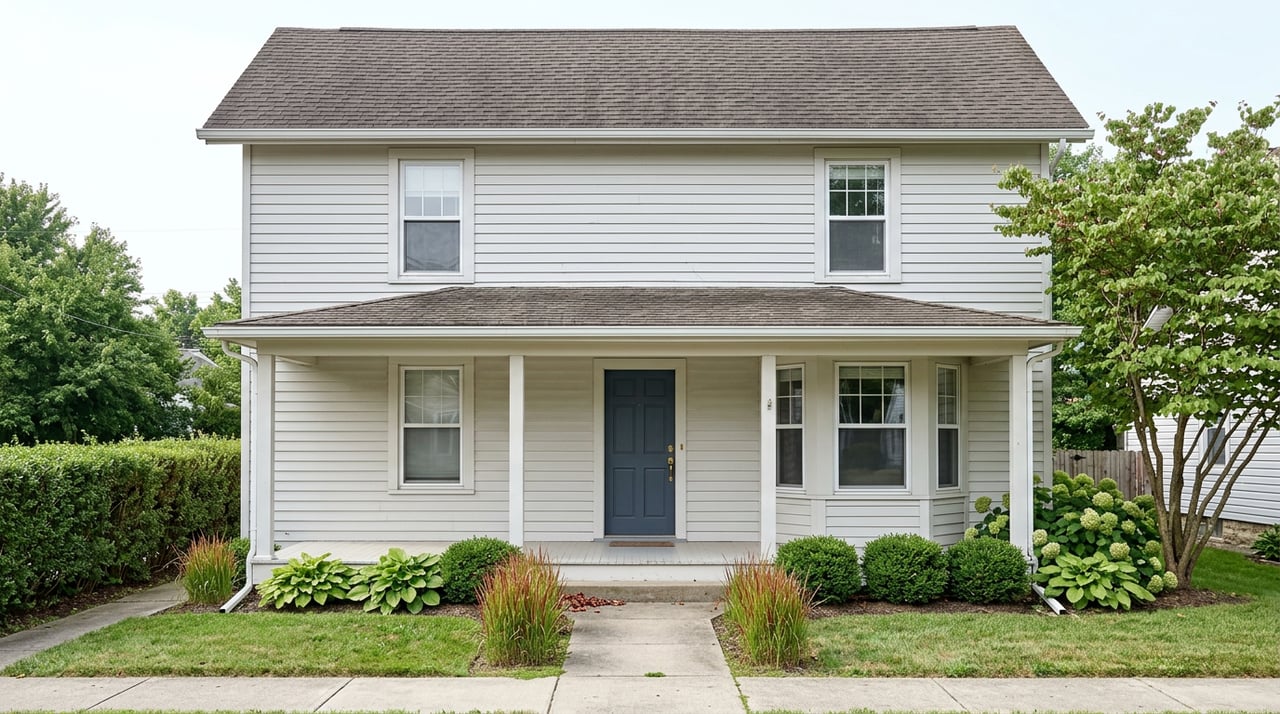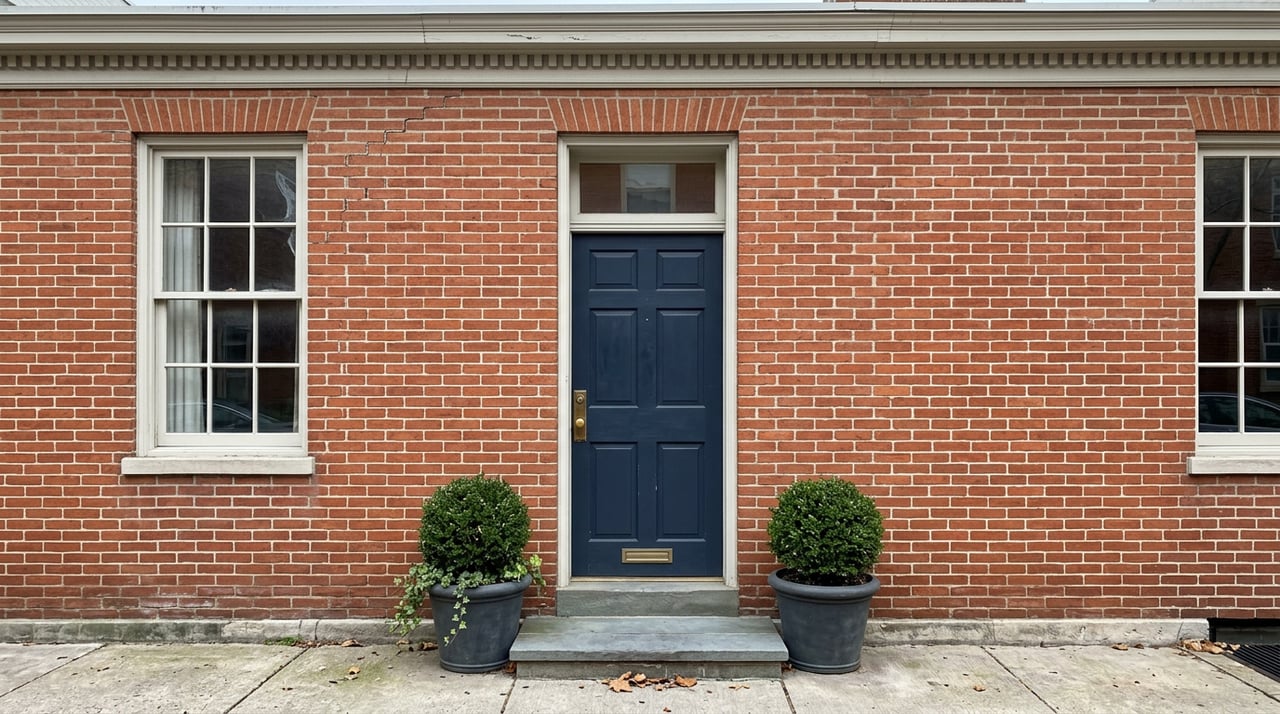
Two Shippensburg homes list on the same weekend. Both are late-1800s brick on side streets off King. Same square footage, similar block, similar photos. One goes under contract in eleven days at ninety-eight percent of ask. The other trades three rounds of inspection concessions and closes twenty-two thousand dollars lower. The difference wasn't the house. It was what each seller could truthfully write on a single page of a state form.
The thesis, up front
If you own a pre-1950 home in or near the Shippensburg Historic District, your pricing risk is not the age of the roof, the plaster walls, or the stone foundation. It is the gap between what Pennsylvania's Seller's Property Disclosure Statement asks you to answer and what you can honestly claim to know. That gap is where buyers reopen negotiations after inspection, and it is where the two-year post-settlement claim window under Pennsylvania's Real Estate Seller Disclosure Law lives.
Every section below is evidence for that claim.
The district your house sits in shapes what an inspector will find
The Shippensburg Historic District is on the National Register of Historic Places, laid out along King Street with Earl Street intersecting near the western commercial node. The eastern end of the district is the oldest portion of Shippensburg and is characterized by mid-eighteenth century log and stone structures. The buildings in this portion of town are primarily two story, three bay structures with gable roofs, with vernacular Georgian architecture predominating and some Federal features common. Moving west, the Italianate style replaced Greek Revival in the 1850s, and the commercial structures along West King Street offer the best examples of the Italianate style in Shippensburg. On the secondary streets, the Queen Anne style was the most popular and vernacular examples can be found throughout the town.
That range matters because a buyer's inspector walking a 1794 stone structure, an 1850 Italianate, and a 1900 Queen Anne is looking for different failure modes in each. In inspecting an older home, you may find that the electrical system is original, that it's new, or that it has had work done on it over the years, and it's not unusual to find electrical components from multiple eras in one home. Stone foundations, mortar joints on brick side walls, galvanized supply lines feeding a second-floor bath added in the 1940s, a knob-and-tube run someone left energized in an attic corner: these are the items that end up in an inspection report, and they are the items the disclosure form asks you about first.
What the form actually asks
Pennsylvania's disclosure statement is codified at 49 Pa. Code § 35.335a. It is not a general "tell us about the house" document. It asks pointed questions that map directly onto pre-war housing stock:
| Disclosure item | What older Shippensburg stock often triggers |
|---|---|
| Type of plumbing (copper, galvanized, lead, PVC, unknown) | Galvanized branches to upstairs baths; occasional lead service lines |
| Electrical system problems or repairs | Mixed-era wiring, knob-and-tube in attics, sub-panels added over decades |
| Underground fuel tanks | Buried heating oil tanks from mid-century conversions, sometimes decommissioned without records |
| Hazardous substances (asbestos, radon, lead paint, UFFI) | Pre-1978 paint layers; asbestos on old duct wraps and vinyl flooring |
| Fill, expansive soil, settlement, subsidence | Stone foundations, sloped floors, stepped cracks near door and window corners |
| Roof leaks, basement leaks, water infiltration | Deteriorated mortar joints acting as water paths |
The regulation is explicit that sellers must answer whether they are aware of any underground tanks or hazardous substances present on the property, including asbestos, PCBs, radon, lead paint, and urea-formaldehyde foam insulation. There is no "the house is 180 years old, so obviously" answer. Every line is yes, no, or unknown.
Why "unknown" is not the safe answer people think it is
Sellers of older homes reach for "unknown" because it feels honest. On the underground tank line especially, that instinct backfires. Pennsylvania's Real Estate Seller Disclosure Law requires sellers to disclose known underground storage tanks on the property and any known contamination, and the PA standard disclosure form asks directly about underground storage tanks, heating oil tanks, and known soil or water contamination. A truthful "unknown" is legal, but it moves the risk onto the buyer's side of the table, and buyers respond by pricing that risk in.
The mechanism runs through financing. Many mortgage lenders and insurance companies are hesitant to approve financing for homes with active or unknown-condition underground oil tanks. On top of that, in Pennsylvania, homeowners are responsible for the cleanup costs associated with a leaking tank on their property, and these costs can range from a few thousand dollars for a minor spill to tens of thousands of dollars for extensive contamination that has reached groundwater or a neighbor's property. A savvy buyer's agent will price that tail risk into the offer, or ask you to pay for a tank sweep before removing the contingency. A less-experienced buyer's lender will simply pause the file.
The same logic applies to the electrical question. Sellers must report power surges, circuit breaker trips, or the presence of outdated knob-and-tube wiring, and if electrical work has been performed, sellers should disclose whether it was permitted and completed by a licensed electrician. If your home was rewired in stages by prior owners, "unknown" invites a buyer to require a licensed electrical evaluation as a condition of removing inspection contingencies.
The two-year clock nobody reads about at closing
Under Pennsylvania's Real Estate Seller Disclosure Law, disclosure risk does not end at settlement. If a buyer discovers a defect that they believe should have been disclosed, they can file a claim, and buyers have up to two years after settlement to bring a claim, and if the court finds that you knowingly failed to disclose a material defect, you could be ordered to pay for the buyer's actual losses. That is a full heating season plus a rainy spring plus another heating season. Enough time for a slow basement leak, a chimney backdraft, or a buried tank fill line to surface.
The protection for sellers is narrow. The law does offer some protection for sellers who genuinely didn't know about the issue, or who believed it had been resolved. "Believed it had been resolved" is stronger with paper: an invoice, a permit, a contractor's letter, a DEP closure report. Without paper, "belief" is a courtroom argument.
Reading the current market through this lens
Central Pennsylvania is not sitting on excess inventory that would let buyers walk away casually. In her mid-2026 update for the Pennsylvania Association of Realtors, Bright MLS chief economist Lisa Sturtevant noted that inventory is still below 2019 levels and remains very tight in many markets in Pennsylvania, especially in central Pennsylvania. She also forecast a 6.5 percent range for mortgage rates for the rest of 2026 and into 2027, and did not project prices falling in major markets in 2026 or 2027.
Tight supply plus stubborn rates means well-prepared listings clear. It does not mean buyers stop reading the disclosure. What it means is that renegotiation, not rejection, is the dominant post-inspection outcome. A seller who arrives at the table with documentation converts a potential price cut into a "we already handled it" moment. A seller who arrives with a page of "unknown" is negotiating in the dark against an inspection report the buyer just paid four to six hundred dollars to produce.
A pre-listing sequence that pays for itself
Before the sign goes in the yard, a Shippensburg historic-district seller can retire most of the surprises the disclosure form is built to expose.
- Pull your own paper first. Insurance claim history, prior inspection reports if you bought the home after 2010, receipts from any electrical, plumbing, or roofing work. If you had an oil-to-gas conversion, find the tank closure documentation. If you cannot find it, treat the tank as an open question.
- Order a magnetometry tank sweep on any property with pre-1970 heating history. A specialist can locate buried steel in a few hours. It is cheaper than an inspection concession.
- Get a targeted electrical evaluation. Not a full rewire estimate. A licensed electrician looking specifically for energized knob-and-tube, over-fused circuits, and unpermitted panel work.
- Have a mason walk the exterior. In a district where mortar joints are frequently the water path, thirty minutes with someone who repoints stone and brick will tell you whether you have a disclosure item or a maintenance item.
- Complete the disclosure with your file open next to you. Every "yes" that comes with a paid invoice attached is worth more at the negotiating table than three "unknowns."
This is the difference between the two listings in the opening. The eleven-day close had a folder. The twenty-two-thousand-dollar concession did not.
FAQ
If my house is on the National Register, do special rules apply to the sale itself? Federal listing is honorific for private residential owners; it does not by itself impose sale-time obligations. Local historic ordinances can affect exterior alterations and permits, which is a maintenance-cost conversation with buyers, not a title issue.
I inherited the house and never lived in it. Do I still have to complete the disclosure? There are limited carve-outs. There are a few limited exceptions, such as transfers between family members, estate-related sales by fiduciaries, newly built homes that have never been occupied, and foreclosure transactions. Confirm which exception, if any, applies to your specific transfer with your attorney before you list.
Should I pre-inspect? For pre-1950 stock in this district, a targeted pre-listing inspection is usually money well spent. You control the narrative and the timing of any repairs, and you convert "unknown" boxes into documented "resolved" ones before buyers ever see the file.
Selling a historic Shippensburg home is a paperwork exercise as much as a marketing one. If you are thinking about listing a King Street, Earl Street, or side-street property in the next six to twelve months, Lisa Mack will walk the house with you, flag the disclosure items an inspector is likely to find, and build the documentation file before the listing photos are taken. Request a Free Home Valuation to start the conversation.